Brief Description
Mount Wuyi is the most outstanding area for biodiversity conservation in south-east China and a refuge for a large number of ancient, relict species, many of them endemic to China. The serene beauty of the dramatic ...
Outstanding Universal Value - Brief Synthesis
Mount Wuyi, located in China’s south-east province of Fujian, contains the largest, most representative example of a largely intact forest encompassing the diversity of the Chinese Subtropical Forest and the South Chinese Rainforest. Of enormous importance for biodiversity conservation, the property acts as a refuge for an important number of ancient, relict plant species, many of them endemic to China, and contains an extremely rich flora and fauna, including significant numbers of reptile, amphibian and insect species.
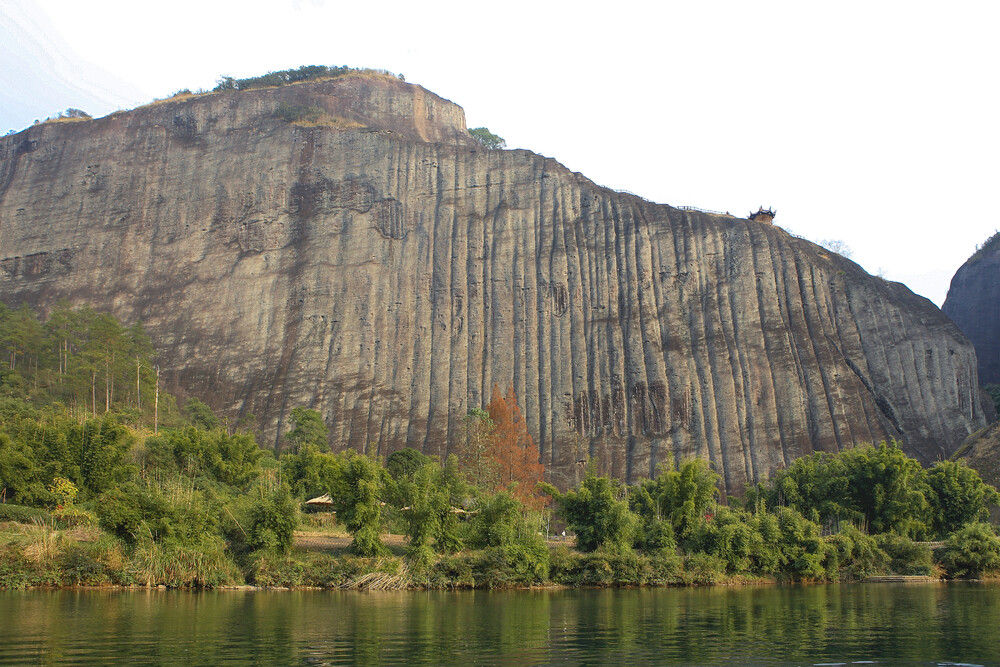
The serene beauty of the dramatic gorges of the Nine-Bend River is of exceptional scenic quality in its juxtaposition of smooth rock cliffs with clear, deep water. Situated along this river are numerous temples and monasteries, many now in ruins, which provided the setting for the development and spread of Neo-Confucianism, a political philosophy which has been very influential in the cultures of East Asia since the 11th century. In particular there are no fewer than 35 ancient Confucian academies dating from the Northern Song to Qing Dynasties (10th to 19th centuries CE). In addition the area contains tombs, inscriptions and rock shelters with wooden boat coffins dating back to the Shang Dynasty (2nd century BCE), and the remains of more than 60 Taoist temples and monasteries.
In the 1st century BCE a large administrative capital was built at nearby Chengcun by the Han Dynasty rulers. Its massive walls enclose an archaeological site of great significance.
The property consists of four protected areas: Wuyishan National Nature Reserve in the west, Nine-Bend Stream Ecological Protection Area in the centre and Wuyishan National Scenic Area in the east are contiguous, and the Protection Area for the Remains of Ancient Han Dynasty is a separate area, about 15km to the south-east. Totalling 107,044 ha, the property is surrounded by a buffer zone of 40,170 ha and has been inscribed for cultural as well as scenic and biodiversity values.