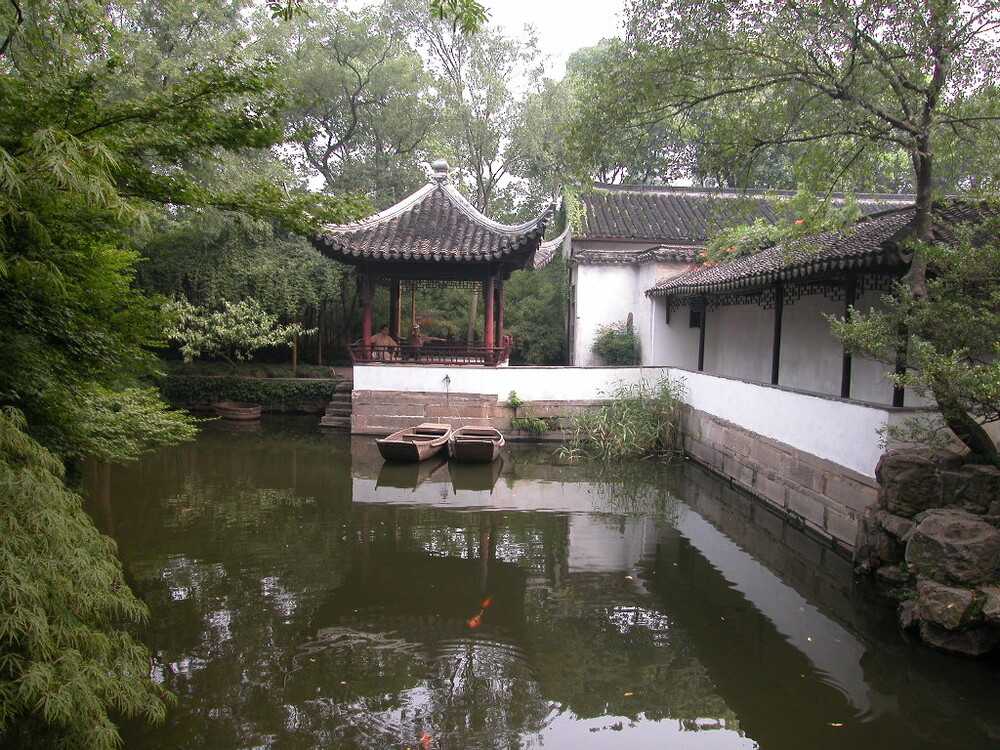
Brief Description
Classical Chinese garden design, which seeks to recreate natural landscapes in miniature, is nowhere better illustrated than in the nine gardens in the historic city of Suzhou. They are generally acknowledged to be ...
Outstanding Universal Value - Brief Synthesis
The classical gardens of Suzhou, Jiangsu Province, China date back to the 6th century BCE when the city was founded as the capital of the Wu Kingdom. Inspired by these royal hunting gardens built by the King of the State of Wu, private gardens began emerging around the 4th century and finally reached the climax in the 18th century. Today, more than 50 of these gardens are still in existence, nine of which, namely the Humble Administrator’s Garden, Lingering Garden, Net Master’s Garden, the Mountain Villa with Embracing Beauty, the Canglang Pavilion, the Lion Grove Garden, the Garden of Cultivation, the Couple’s Garden Retreat, and the Retreat & Reflection Garden, are regarded as the finest embodiments of Chinese “Mountain and Water” gardens. The earliest of these, the Canglang Pavilionwas built in the early 11th century on the site of an earlier, destroyed garden. Conceived and built under the influence of the unconstrained poetic freehand style originally seen in traditional Chinese landscape paintings, they are noted for their profound merging of exquisite craftsmanship, artistic elegance and rich cultural implications. These gardens lend insight into how ancient Chinese intellectuals harmonized conceptions of aestheticism in a culture of reclusion within an urban living environment.
Garden masters from each dynasty adapted various techniques to artfully simulate nature by skillfully adapting and utilizing only the physical space available to them. Limited to the space within a single residence, classical Suzhou gardens are intended to be a microcosm of the natural world, incorporating basic elements such as water, stones, plants, and various types of buildings of literary and poetic significance. These exquisite gardens are a testament to the superior craftsmanship of the garden masters of the time. These unique designs that have been inspired but are not limited by concepts of nature have had profound influence on the evolution of both Eastern and Western garden art. These garden ensembles of buildings, rock formations, calligraphy, furniture, and decorative artistic pieces serve as showcases of the paramount artistic achievements of the East Yangtze Delta region; they are in essence the embodiment of the connotations of traditional Chinese culture.