Brief Description
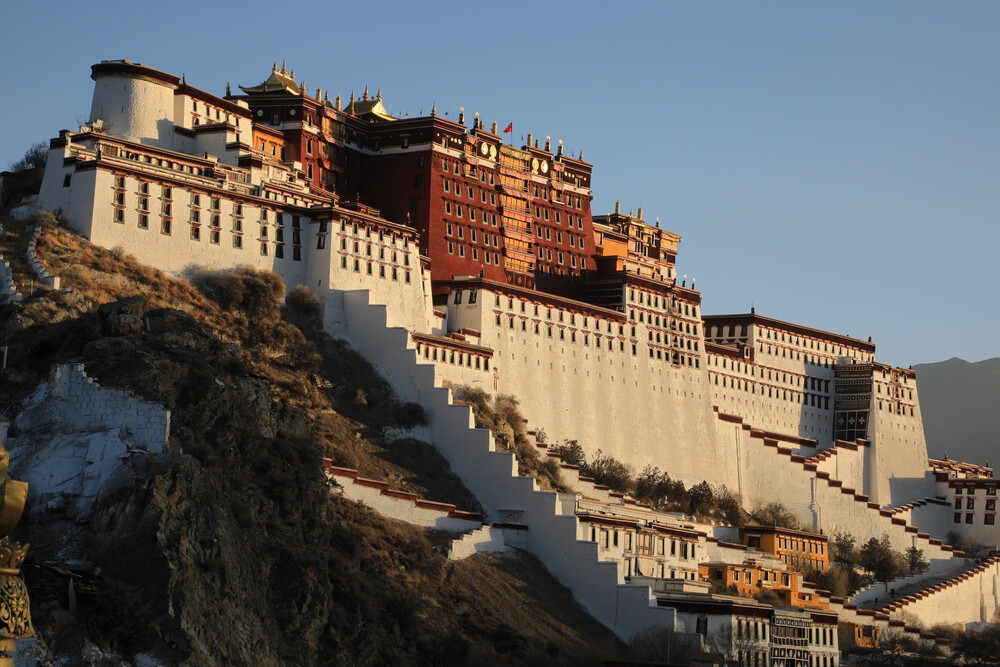
The Potala Palace, winter palace of the Dalai Lama since the 7th century, symbolizes Tibetan Buddhism and its central role in the traditional administration of Tibet. The complex, comprising the White and Red ...
Outstanding Universal Value - Brief Synthesis
Enclosed within massive walls, gates and turrets built of rammed earth and stone the White and Red Palaces and ancillary buildings of the Potala Palace rise from Red Mountain in the centre of Lhasa Valley at an altitude of 3,700 metres. As the winter palace of the Dalai Lama from the 7th century CE the complex symbolizes Tibetan Buddhism and its central role in the traditional administration of Tibet. The White Palace contains the main ceremonial hall with the throne of the Dalai Lama, and his private rooms and audience hall are on the uppermost level. The palace contains 698 murals, almost 10,000 painted scrolls, numerous sculptures, carpets, canopies, curtains, porcelain, jade, and fine objects of gold and silver, as well as a large collection of sutras and important historical documents. To the west and higher up the mountain the Red Palace contains the gilded burial stupas of past Dalai Lamas. Further west is the private monastery of the Dalai Lama, the Namgyel Dratshang.
The Jokhang Temple Monastery was founded by the regime also in the 7th century, in order to promote the Buddhist religion. Covering 2.5ha in the centre of the old town of Lhasa, it comprises an entrance porch, courtyard and Buddhist hall surrounded by accommodation for monks and storehouses on all four sides. The buildings are constructed of wood and stone and are outstanding examples of the Tibetan Buddhist style, with influences from China, India, and Nepal. They house over 3,000 images of Buddha and other deities and historical figures along with many other treasures and manuscripts. Mural paintings depicting religious and historical scenes cover the walls.
Norbulingka, the Dalai Lama's former summer palace constructed in the 18th century, is located on the bank of the Lhasa River about 2km west of the Potala Palace in a lush green environment. It comprises a large garden with four palace complexes and a monastery as well as other halls, and pavilions all integrated into the garden layout to create an exceptional work of art covering 36ha. The property is closely linked with religious and political issues, having been a place for contemplation and for signing political agreements.
The Historic Ensemble of the Potala Palace, Jokhang Temple and Norbulingka embody the administrative, religious and symbolic functions of the Tibetan theocratic government through their location, layout and architecture. The beauty and originality of the architecture of these three sites, their rich ornamentation and harmonious integration in a striking landscape, contribute to their Outstanding Universal Value.