Brief Description
China Danxia is the name given in China to landscapes developed on continental red terrigenous sedimentary beds influenced by endogenous forces (including uplift) and exogenous forces (including weathering and ...
Outstanding Universal Value - Brief Synthesis
China Danxia is a serial property comprising six component parts (Chishui, Taining, Langshan, Danxiashan, Longhushan, and Jianglangshan) found in the sub-tropical zone of south-eastern China within approximately 1700 km crescent shaped arc from Guizhou Province in the west to Zhejiang Province in the east.
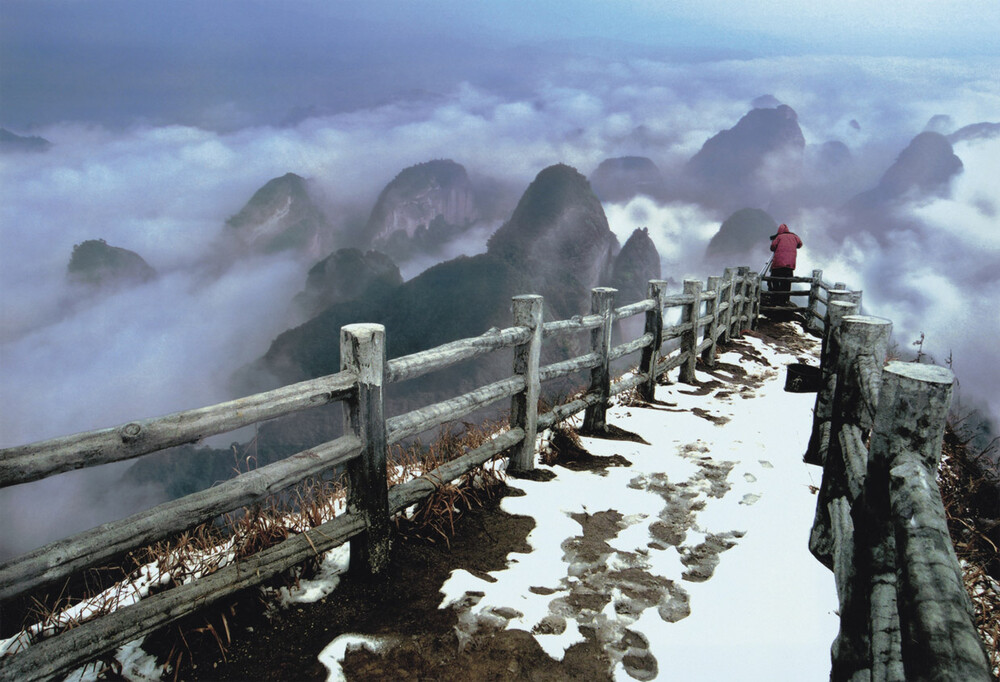
China Danxia is the name given in China to landscapes developed on continental red terrigenous sedimentary beds influenced by endogenous forces (including uplift) and exogenous forces (including weathering and erosion). It is characterised by spectacular red cliffs and a range of erosional landforms, including dramatic natural pillars, towers, ravines, valleys and waterfalls. The process of its development is characterised by a particular rock sequence, tectonic background, climatic conditions, erosional processes and landforms and these processes have been presented as an interim model.
Due to the combined endogenic (tectonic uplift) and exogenic (climatic, erosion, weathering) forces, and other factors, the Danxia landforms have been developed in red sedimentary sequences continuously from the Neogene until the present. The six component parts represent the most important examples of "least eroded" to "most eroded" Danxia landforms, providing a range of different aspects of the phenomenon, and illustrate both the range of landforms in relation to the forces and processes that formed them, together with a range of associated landscapes.